






Every day, warehouses, supermarkets, e-commerce fulfillment centers, packaging factories, and distribution centers generate large volumes of waste cardboard. From discarded shipping boxes to corrugated cardboard sheets and packaging offcuts, these recyclable materials can quickly occupy valuable floor space if they are not handled properly.
Although waste cardboard is recyclable, collecting, storing, and transporting loose cardboard can be expensive and labor-intensive. Its bulky nature makes it difficult to stack efficiently, while frequent manual handling can slow down daily operations.
For businesses handling substantial volumes of waste cardboard, investing in an automatic horizontal cardboard baler can help transform cardboard waste management into a more organized and efficient process.
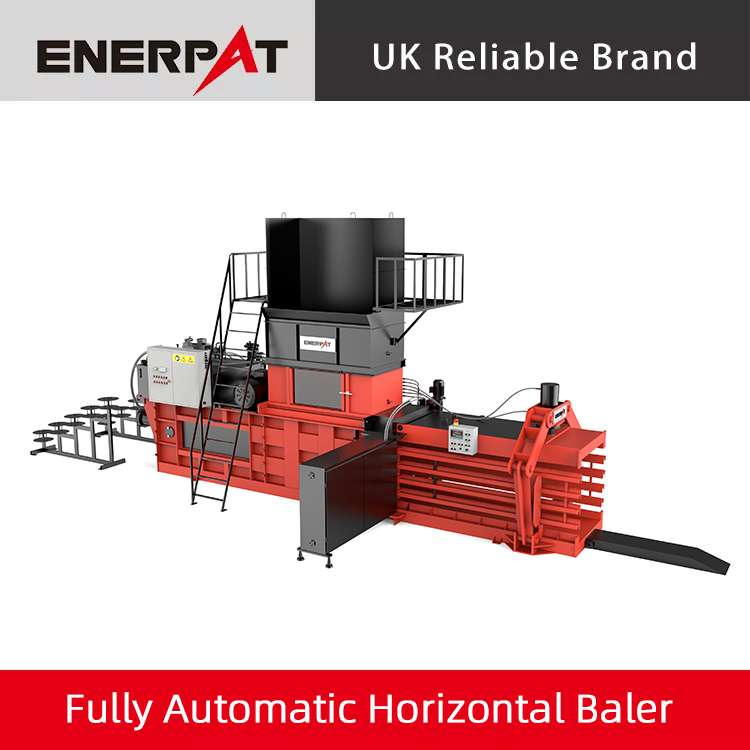
ENERPAT's Auto-Tie Horizontal Hydraulic Baler combines hydraulic compression, continuous material feeding, and automatic wire tying to help recycling businesses process cardboard into compact, manageable bales.
Cardboard is one of the most common recyclable materials in commercial and industrial environments. However, managing large quantities of waste cardboard presents several operational challenges.
Used corrugated cardboard boxes contain considerable empty space. When discarded without compression, they accumulate quickly in warehouses, loading areas, and recycling facilities.
As cardboard piles grow, businesses may have less room for inventory, production activities, and other essential operations.
In facilities with high cardboard volumes, workers may spend significant time collecting boxes, flattening packaging, stacking materials, and preparing cardboard for transportation.
These repetitive tasks can divert employees from more productive activities.
Loose cardboard has a low bulk density, meaning vehicles can run out of available space before reaching their maximum payload.
This can lead to more frequent collections and higher transportation costs. Compacting cardboard into properly formed bales helps businesses use storage and vehicle space more efficiently.
For commercial cardboard recyclers, bale consistency matters. Poorly formed or inadequately tied bales can be difficult to stack, move, and load.
A suitable cardboard baling machine helps produce compact, securely tied bales that are easier to handle throughout the recycling supply chain.
An auto-tie horizontal hydraulic baler is designed to convert loose cardboard into compact bales through a continuous, automated process.
The ENERPAT Auto-Tie Horizontal Hydraulic Baler integrates several stages of cardboard processing.
Collected cardboard boxes, corrugated sheets, and other suitable paper-based packaging materials are loaded into the feeding system.
For higher-volume operations, a conveyor can transport cardboard to the baler's feed hopper, helping maintain a steady material flow.
Inside the compression chamber, a hydraulic ram applies substantial pressure to compact the loose cardboard.
Repeated compression forms a dense bale, reducing the volume occupied by the original material.
When the preset bale length is reached, the automatic tying system feeds and secures the binding wire around the bale.
Automatic tying reduces the need for operators to manually tie every finished bale and helps maintain consistent bale formation.
The finished bale is discharged from the machine and can be transferred to a designated storage area, a bale conveyor, or a loading area.
These compact bales are easier to stack, handle, and prepare for transportation to paper mills or other recycling facilities.
By combining feeding, hydraulic compression, automatic tying, and bale discharge, an automatic cardboard baler helps streamline the movement of waste cardboard from collection to recycling.
Loose cardboard can quickly fill valuable warehouse space. Hydraulic compression significantly reduces its volume, allowing facilities to organize recyclable materials more efficiently.
Compact bales can also be stacked in designated storage areas, subject to appropriate handling and site safety procedures.
Manual baling requires workers to participate in multiple stages of the process, including material handling and bale tying.
An automatic horizontal baler combines continuous feeding with automatic wire tying, reducing manual intervention and helping operators manage larger volumes of cardboard more systematically.
Actual labor savings depend on the existing process, material volume, and degree of automation.
Compact, consistently formed cardboard bales can improve the utilization of available truck and warehouse space.
For recycling businesses transporting cardboard over long distances, better space utilization may help reduce the number of collections or shipments required.
The actual savings depend on bale dimensions, vehicle capacity, weight restrictions, and transportation arrangements.
Paper mills and cardboard recycling businesses need a reliable supply of recyclable raw materials.
Producing uniform, securely tied bales helps simplify material handling, storage, and shipment preparation.
For businesses selling recovered cardboard, bale specifications should be aligned with the requirements of their downstream buyers.
For large distribution centers, commercial recycling facilities, and packaging manufacturers, cardboard waste can be generated continuously throughout the working day.
ENERPAT's HBA Series is designed for high-volume applications, with selected configurations offering throughput of up to 20 tons per hour. Actual capacity varies according to the model, cardboard characteristics, feeding conditions, and operating setup.
An automatic cardboard baler can support a wide range of businesses that generate or process significant quantities of recyclable cardboard.
E-commerce Fulfillment Centers
Online retailers and fulfillment centers receive and dispatch products in large quantities of corrugated packaging. A cardboard baler helps manage discarded shipping boxes and keep packing areas organized.
Supermarkets and Retail Distribution Centers
Retail operations generate cardboard from incoming merchandise, shelf-ready packaging, and replenishment activities. A horizontal baler helps consolidate cardboard before collection by recycling contractors.
Packaging and Corrugated Box Manufacturers
Paper packaging factories produce cardboard offcuts, rejected packaging, and production scrap. A suitable baling system helps collect and compact these materials for internal handling or recycling.
Commercial Recycling Companies
Professional recyclers need efficient equipment to process cardboard collected from multiple businesses. An automatic cardboard baler can support continuous production and prepare recovered cardboard for resale.
Warehouses and Logistics Facilities
Large warehouses often handle substantial amounts of packaging waste. Compressing cardboard at the source helps improve housekeeping and make better use of available floor space.
Material Recovery Facilities (MRFs)
Facilities that sort recyclable materials can integrate horizontal balers into their processing lines to compact separated cardboard and prepare it for downstream recycling.
Selecting the right cardboard baling equipment involves more than comparing hydraulic pressure or machine price. Businesses should consider material volume, feeding arrangements, bale specifications, available space, and long-term operating requirements.
The ENERPAT Auto-Tie Horizontal Hydraulic Baler is designed to support efficient processing of cardboard and other suitable recyclable materials.
Key features include:
Automatic Wire Tying: Automatically secures finished bales, reducing manual tying work.
Continuous Feeding: Can be integrated with a conveyor system to support steady material flow.
Hydraulic Compression: Compresses loose cardboard into compact bales for more efficient storage and transportation.
Adjustable Bale Specifications: Selected configurations accommodate different bale dimensions and production requirements.
Industrial Applications: Suitable for recycling facilities, distribution centers, warehouses, and manufacturing operations handling substantial recyclable material volumes.
System Integration: Can be configured with appropriate feeding and downstream handling equipment according to the facility's requirements.
With the right configuration, businesses can establish a more organized cardboard recycling workflow, from collecting loose packaging waste to producing bales ready for storage or shipment.
Before purchasing an automatic cardboard baler, consider the following factors.
Daily Cardboard Volume
Estimate how many tons of waste cardboard your facility generates per day or per hour. The required throughput should match both peak material generation and normal operating conditions.
Cardboard Type and Condition
Determine whether you mainly process corrugated cardboard, flattened shipping boxes, cardboard sheets, or mixed paper waste. Moisture content and contamination can affect compression and bale quality.
Required Bale Weight and Dimensions
Ask your downstream recycling buyer about preferred bale dimensions, weight, and density. These requirements can help determine the most suitable baler configuration.
Feeding Method
Smaller operations may use manual loading, while high-volume facilities may benefit from conveyor feeding or integration with an existing sorting line.
Available Installation Space
Consider the footprint of the baler, feeding conveyor, bale discharge area, and finished-bale storage zone.
Automation and Operating Costs
Evaluate labor requirements, electrical consumption, maintenance needs, tying-wire usage, and expected operating hours. The best solution is one that matches your actual material flow and production targets.
A professional equipment supplier can help assess these factors before recommending a machine.
Waste cardboard should not have to become a persistent storage and handling problem. With an appropriate recycling process, discarded boxes and corrugated packaging can be collected, compressed, and prepared for reuse as recovered paper fiber.
For businesses processing large quantities of cardboard, an automatic horizontal baler offers a practical way to reduce loose-material volume, improve handling efficiency, and support more organized recycling operations.
The ENERPAT Auto-Tie Horizontal Hydraulic Baler combines hydraulic compression and automatic tying to help businesses move from loose cardboard waste to compact, transport-ready bales.
Whether you operate a warehouse, distribution center, packaging factory, or commercial recycling facility, choosing the right cardboard baling solution starts with understanding your material volume and operating requirements.
Looking for an automatic cardboard baler for your recycling operation?
Contact ENERPAT to discuss your cardboard type, daily processing volume, target bale specifications, and installation requirements. Our team can help evaluate a suitable horizontal baling solution for your business.
Request a Quote: Contact ENERPAT for a solution tailored to your cardboard recycling needs.
From Factory Testing to On-Site Installation: ENERPAT’s Commitment Goes Beyond Equipment D
READ FULLLos Angeles, California: ENERPAT Hopper-Style Automatic Metal Baler – Three Things Every B
READ FULLLocation: Las Vegas, Nevada, USAEquipment: ENERPAT Automa
READ FULL

Have a question or need a quote? Fill out this form and our team will get back to you quickly!