





Reliable Equipment. Dependable Support. Clear Purchase Protection.
For a busy warehouse or recycling facility, cardboard waste is more than a housekeeping issue. Large volumes of loose corrugated boxes take up valuable floor space, create handling challenges, and require time and labor to move. Without an efficient baling system, recyclable cardboard can quickly accumulate and interrupt daily operations.
At a customer facility in New Jersey, USA, ENERPAT's fully automatic horizontal baling system was installed to process loose cardboard and prepare it for easier storage and transportation.
The project highlights three questions that matter to every industrial equipment buyer:
Is the machine reliable and easy to operate?
If something goes wrong, will someone provide support?
What protection does the customer have if the equipment does not meet expectations?
These are not small details. They are the foundation of a confident equipment purchase.
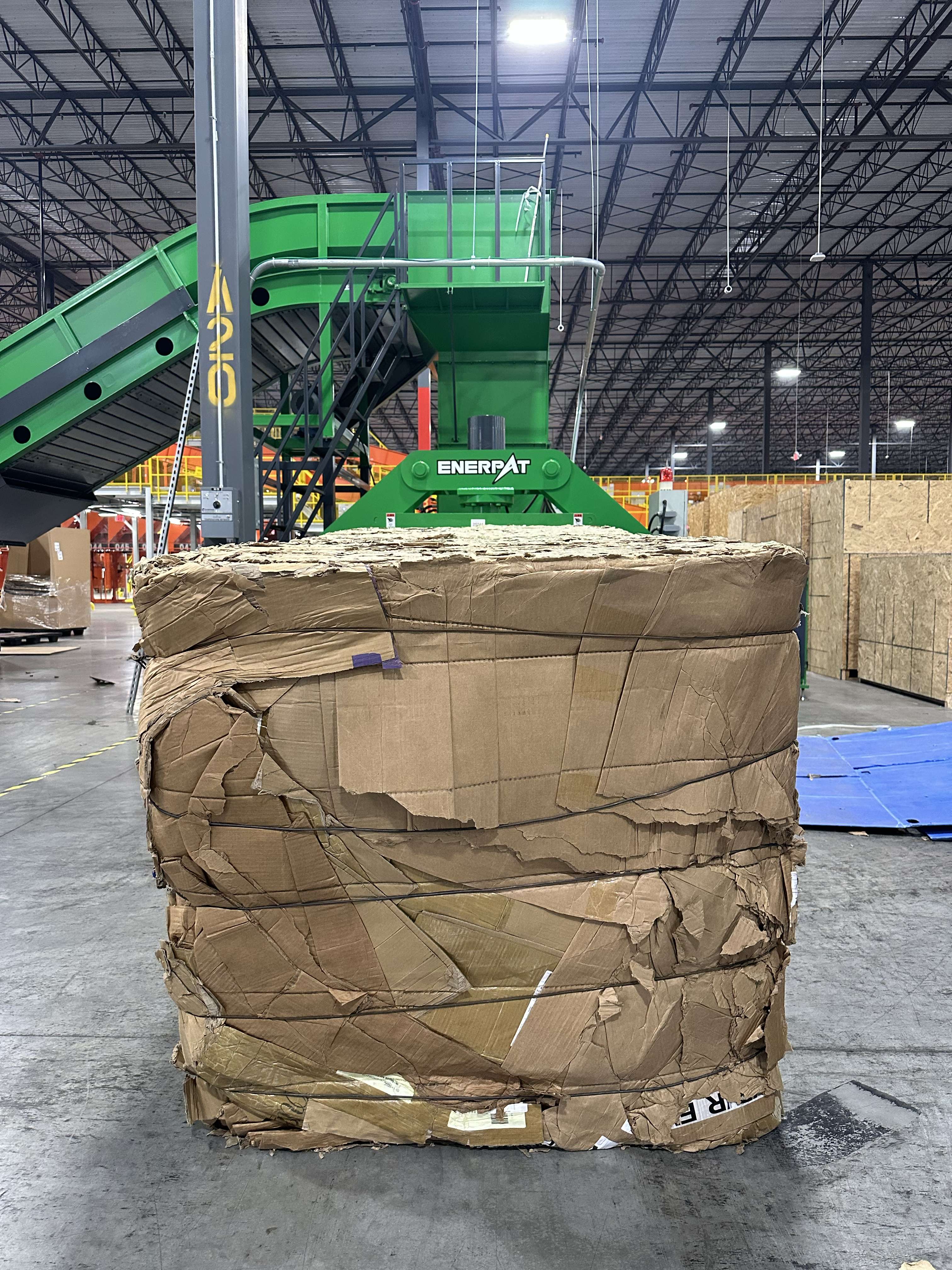
The site photos and installation footage show an ENERPAT green horizontal baling system integrated with a conveyor feeding arrangement. Loose cardboard is conveyed toward the baler, compressed into compact rectangular bales, and secured for subsequent handling.
For facilities handling large quantities of used corrugated cardboard, this workflow can make a significant difference.
Instead of relying entirely on manual collection and handling, the automatic horizontal baler brings several stages of the process together:
Conveyor feeding: Moves cardboard toward the baling chamber and supports a more organized material flow.
Hydraulic compression: Compresses loose cardboard into compact, manageable bales.
Automatic bale tying: Secures completed bales without requiring operators to tie each bale manually.
Bale handling: Produces compact packages that are easier to stack, store, and prepare for transportation.
The ENERPAT HBA series is designed for continuous industrial baling applications. Its automatic tying system helps reduce manual intervention, while the horizontal configuration is suitable for facilities processing regular or high volumes of recyclable materials.
A baler is not simply a machine that presses cardboard. It is part of a facility's daily material-handling process.
Buyers should consider the complete equipment configuration, including the hydraulic system, electrical controls, feeding conveyor, compression structure, automatic tying mechanism, and safety features.
ENERPAT's published HBA product information describes the use of established electrical component brands, including Siemens and Schneider, in applicable configurations. The final component selection should always be confirmed against the customer's specific machine specification.
For customers, dependable equipment means more than a strong compression force. It means a machine selected for the actual material, designed for the required working conditions, and supported by a clear operating and maintenance plan.
For an American warehouse or recycling facility, an equipment breakdown can affect more than the machine itself. Cardboard may continue accumulating, operators may need to reorganize their work, and material handling can become less efficient.
That is why buyers should evaluate after-sales support before placing an order—not after a problem occurs.
ENERPAT's published information for U.S. customers describes local support resources and technical assistance for equipment installation, commissioning, operator training, and after-sales service. On-site support is arranged according to project requirements and should be confirmed in the sales agreement.
A practical support process should cover:
Installation and commissioning
The equipment needs to be installed and checked according to the agreed layout, electrical requirements, and operating conditions before production starts.
Operator training
Operators should understand the feeding process, control-panel functions, operating procedures, safety requirements, and routine maintenance tasks.
Troubleshooting and technical assistance
If an alarm, abnormal noise, tying issue, or hydraulic problem occurs, the customer should know whom to contact and what information to provide. Photos, videos, alarm messages, and operating details can help technical personnel assess the issue.
Spare parts and maintenance
A clear spare-parts process helps customers understand which components may need periodic inspection or replacement and how to obtain suitable replacements.
ENERPAT's published HBA warranty information describes a 12-month warranty for the complete machine and a 5-year warranty for hydraulic cylinders. Coverage, exclusions, and the warranty start date must be confirmed in the final contract for the selected configuration.
For an industrial buyer, the important question is not simply whether a supplier says, "We provide service." It is whether the support scope, contact channel, warranty coverage, and responsibilities are clearly documented.
This is one of the most important questions buyers should ask before purchasing industrial machinery.
A fully automatic horizontal baler is a large industrial system. Its suitability depends on the material, daily volume, bale dimensions, site layout, feeding method, electrical supply, and downstream handling requirements.
For this reason, an industrial baler should not be purchased based on a product photo or a general capacity statement alone.
Before ordering, customers should request:
A material assessment based on cardboard samples, photos, videos, or material specifications.
Confirmation of the expected bale dimensions and suitable bale weight range.
A written machine configuration and technical specification.
Confirmation of conveyor layout, installation requirements, and site utilities.
A clear explanation of the warranty, acceptance criteria, and after-sales responsibilities.
ENERPAT's product information also describes material testing and application evaluation as part of its equipment-selection process.
Customers deserve a clear answer before making a purchase.
However, a large industrial machine should not be presented as if it were an ordinary retail product with an automatic, unconditional return option. Return eligibility may depend on the signed contract, equipment configuration, manufacturing status, delivery and installation conditions, acceptance results, and the reason for the return.
For this New Jersey project, no specific return agreement or return event has been provided. Therefore, ENERPAT does not claim that this customer received an unconditional return guarantee.
The right approach is to put the agreed acceptance procedure and any applicable return, cancellation, or remedy conditions in writing before the order is confirmed.
A transparent agreement protects both the customer and the equipment supplier.
The site images show loose cardboard collected in the warehouse, a conveyor-based feeding arrangement, the ENERPAT horizontal baler, and finished cardboard bales ready for handling.
This is the practical purpose of an automatic cardboard baling system: turning loose, bulky recyclable material into compact packages that are easier to manage within an industrial facility.
For warehouses, distribution centers, manufacturing plants, and recycling operations, an appropriately configured automatic horizontal baler can help:
Reduce the space occupied by loose cardboard.
Organize recyclable material at the point of generation.
Reduce repetitive manual bale-tying work.
Improve the consistency of finished cardboard bales.
Make internal handling, storage, and transportation planning easier.
The actual results depend on the material condition, machine model, feeding arrangement, operating hours, and site workflow.
Choosing industrial recycling equipment means choosing a long-term equipment partner.
ENERPAT provides horizontal baling equipment for cardboard, waste paper, plastic, and other suitable recyclable materials. For U.S. customers, the company also publishes information about local support resources, technical assistance, installation, commissioning, and operator training.
Before purchasing, ask the questions that matter:
Will the machine handle my material?
Who will support me if a problem occurs?
What exactly does the warranty cover?
What are the written acceptance and return conditions?
A reliable supplier should be prepared to discuss all four.
If your facility in New Jersey or elsewhere in the United States is handling large volumes of cardboard, contact ENERPAT to discuss your material, daily processing requirements, bale specifications, and suitable automatic horizontal baler configuration.
ENERPAT — Reliable Recycling Equipment, Practical Technical Support, and Clear Project Agreements.
Los Angeles, California: ENERPAT Hopper-Style Automatic Metal Baler – Three Things Every B
READ FULLLocation: Las Vegas, Nevada, USAEquipment: ENERPAT Automa
READ FULLNew Jersey, USA: ENERPAT Fully Automatic Horizontal Baler Helps Streamline Cardboard Recycling O
READ FULL

Have a question or need a quote? Fill out this form and our team will get back to you quickly!